Starting in the nursery
Tomato production for most of our members begins weeks before a single seed touches its final growing bed, in a simple nursery — often no more than a shaded seed tray — where seedlings are raised until they have several true leaves and a strong enough root system to survive transplanting.
Transplanting and early care
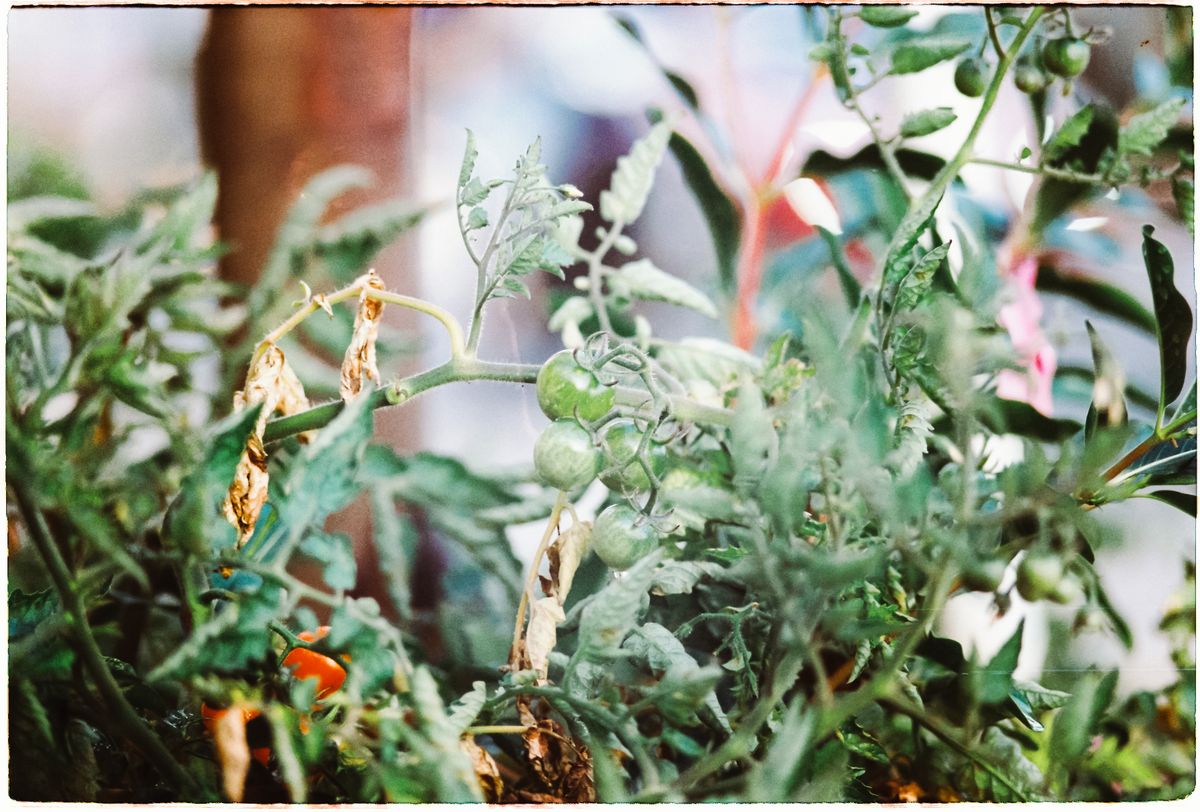
Seedlings are transplanted into their final bed or sack once established, usually staked early to support the plant as it grows, since tomato branches heavy with fruit will otherwise collapse under their own weight. Consistent watering in this early stage matters more than at almost any other point in the plant's life, since irregular watering during fruit development is the most common cause of blossom end rot, a problem several members reported before adopting more consistent drip watering.
Managing pests and disease through fruiting
Tomatoes are among the more disease-prone crops our members grow, particularly for fungal blights during wetter periods, and we cover tomato-specific pest and disease management in more depth as part of our general vegetable pest training. Regular removal of lower leaves touching the soil and adequate spacing between plants for airflow are the two habits that prevent most fungal problems before they start.
From harvest to market day
A well-managed tomato plant can produce fruit continuously over several weeks rather than all at once, which several members have learned to use to their advantage, staggering plantings across a season to keep a steady rather than a single overwhelming harvest arriving at market day.
Tomatoes that do not sell fresh at market day are, for members who have taken up basic value addition, increasingly turned into simple dried or preserved products rather than sold at a loss or left to spoil — closing the loop from seedling all the way through to a shelf-stable product.
What a full season's costs and returns typically look like
For members curious about tomato economics specifically, a typical season involves costs for seed or seedlings, staking material, and any additional manure or compost beyond what a household is already producing, set against sales across several weeks of staggered harvest at market day. Tomatoes generally command a higher per-kilogram price than leafy vegetables like kale or spinach, which is part of why several members treat tomatoes as their primary cash crop even while continuing to grow leafy vegetables mainly for household consumption.
The tradeoff is that tomatoes demand more consistent attention — staking, disease monitoring, careful watering — than the comparatively forgiving leafy vegetables covered in our sack gardening training, which is why we generally recommend members build tomato growing experience only after a season or two of successful leafy vegetable growing, rather than starting with tomatoes as a first crop.
Choosing tomato varieties suited to Babadogo conditions
Not every tomato variety performs equally well under Babadogo's growing conditions, and we generally steer members toward hardier, disease-resistant varieties over larger commercial varieties bred primarily for uniform appearance rather than resilience. A hardier variety with a slightly less uniform appearance but considerably better resistance to the fungal blights covered elsewhere in this article tends to produce a more reliable harvest for a smallholder grower than a more delicate commercial variety.
Members can source appropriate varieties through our group buying program or through seed saved by other experienced tomato-growing members, similar in principle to how our community seed bank preserves locally proven varieties of other crops.
Tomatoes are, in many ways, a good test crop for a member ready to move beyond the more forgiving leafy vegetables covered elsewhere on this blog — the extra care they demand around watering consistency and disease prevention builds exactly the kind of attentiveness that pays off across every other crop a household grows afterward. We continue to collect informal yield and disease data from our tomato-growing members season to season, which has already shaped some of the variety and spacing recommendations covered in this article, and which we expect to keep refining as more members build multi-season tomato growing experience within Babadogo's specific conditions. We would add that tomatoes remain one of the more demanding crops in our curriculum, and members who find their first attempt disappointing should not read that as a sign the crop is unsuitable for them — a second attempt with lessons applied from the first often performs considerably better.
Key takeaways
- Tomato production starts weeks earlier in a simple shaded nursery.
- Consistent watering during fruit development prevents blossom end rot.
- Removing lower leaves and proper spacing prevent most fungal disease problems.
- Staggered planting spreads harvest across weeks rather than one overwhelming glut.
Frequently asked questions
Why do my tomatoes get blossom end rot?
It is usually caused by irregular watering during fruit development — a consistent drip or gravity-fed watering routine largely prevents it.
How can I avoid an overwhelming tomato glut at harvest?
Stagger plantings across the season rather than planting everything at once, which spreads the harvest more evenly across several weeks.
Do tomatoes need staking in a sack garden?
Yes — even in a sack, a simple stake or support keeps fruit-heavy branches from breaking or resting on damp soil.
Do you sell tomato seedlings directly to members?
We don't sell seedlings ourselves, but our group buying program and member seed-sharing network both help members source them affordably.