Where plastic waste actually shows up in farming
Most members do not think of farming as a source of plastic waste, but between seedling trays, input packaging, mulch film, and irrigation tubing, a working kitchen garden generates more plastic than it first appears to. As Green Revolution Farmers has grown, reducing this waste has become a small but genuine part of our sustainability work alongside water conservation and composting.
Seedling trays and containers
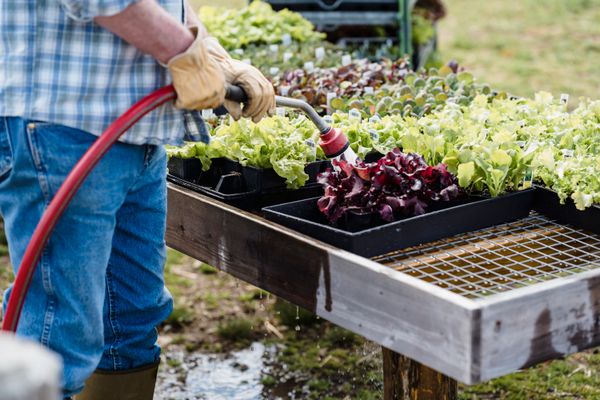
Many members start seedlings in purchased plastic trays or repurposed plastic containers, both of which eventually crack or degrade with sun exposure and need replacing. We now encourage members to start seedlings in biodegradable alternatives where practical — folded newspaper pots, for example, which can be planted directly into the ground without removing the seedling and simply break down in the soil, or reused eggshells and other household containers that would otherwise go straight to waste.
Input packaging
Seed, fertilizer, and manure often arrive in plastic packaging that has no further use once emptied. Our group buying program has helped somewhat here simply by consolidating purchases into fewer, larger transactions rather than many individual small purchases, each with its own packaging; we are also encouraging members and suppliers to reuse sturdy input containers for storage rather than discarding them after a single use.
Mulch film and irrigation tubing
Some larger-scale commercial growers use plastic mulch film to suppress weeds and retain moisture, but this is not a technique we teach our members, both because organic mulch materials (covered in a separate article) achieve much of the same benefit without the plastic waste, and because plastic film requires eventual disposal that most Babadogo households have no good way to manage responsibly.
For irrigation, we teach gravity-fed drip systems built from repurposed containers and basic tubing rather than newly purchased plastic irrigation kits, which both lowers cost and gives an existing plastic container, like a jerrycan otherwise destined for disposal, a genuinely useful second life.
What this adds up to
None of these individual changes eliminate plastic use entirely, and we are honest with members that some plastic — a durable water storage tank, for example — is worth using precisely because it lasts many years and avoids the repeated waste of a shorter-lived alternative. The goal is not zero plastic at any cost, but reducing genuinely avoidable, short-lived plastic waste wherever a reasonable alternative exists, which is a standard we try to apply across all of our training rather than treating it as a separate, standalone program.
What suppliers can do differently
Reducing input packaging waste is not solely a household-level responsibility, and we have started raising the topic directly with the suppliers our group buying program works with, asking whether bulk orders can be delivered in reusable sacks or containers collected and returned for reuse rather than single-use packaging for every transaction. Progress on this front has been gradual and depends on individual supplier willingness, but a few of our regular suppliers have begun offering this option for our larger bulk orders.
We see this as a natural extension of the leverage our group buying program already gives members collectively — a supplier more willing to accommodate a request from a large combined order than from a single small household purchase.
We do not treat this as an all-or-nothing standard, and some plastic use — a durable, long-lasting water tank, for example — is genuinely worth it precisely because it avoids the repeated waste of shorter-lived alternatives. The goal across all of our training is reducing genuinely avoidable, short-lived plastic waste wherever a reasonable alternative exists, applied consistently rather than as a separate standalone program. We recognize this remains a modest, ongoing effort rather than a fully solved problem, and we are honest that some plastic use within our own programs remains difficult to eliminate entirely given current constraints. We would rather report this honestly than overstate progress on an issue we know still needs continued attention.
Key takeaways
- Seedling trays, input packaging, and irrigation tubing are common sources of farming plastic waste.
- Biodegradable alternatives like newspaper pots can replace many plastic seedling containers.
- Group buying reduces packaging waste by consolidating many small purchases into fewer larger ones.
- Gravity-fed drip systems reuse containers like jerrycans rather than requiring new plastic kits.
Frequently asked questions
What can I use instead of plastic seedling trays?
Folded newspaper pots or reused household containers like eggshells work well and can often be planted directly into the ground.
Is all plastic use avoidable in farming?
No — some durable items, like a long-lasting water storage tank, are genuinely worth the plastic given how long they last and how much repeated waste they avoid.
Does group buying really reduce plastic waste meaningfully?
Yes — consolidating many individual purchases into fewer, larger bulk orders directly reduces the total packaging used.
Is this program formally tracked or measured?
Not as rigorously as our training attendance or savings group figures — it remains a set of practical habits we encourage rather than a formally measured program.