Why water is the binding constraint
In Babadogo, water is usually the single factor that determines whether a season goes well, more than soil or seed quality. Piped water is not always reliable, boreholes are shared, and buying water by the jerrycan adds real cost to every growing cycle. Conserving the water a household already has access to is often more valuable than trying to find more of it.
Mulching: the cheapest first step
A layer of dry grass, straw, or even shredded cardboard spread across the surface of a bed or sack can cut evaporation dramatically, keeping soil moist for noticeably longer between waterings. It is free or nearly free for most members, since dry grass and crop residue are already available on most plots, and it has the added benefit of suppressing weeds that would otherwise compete for the same water.
Low-cost drip lines
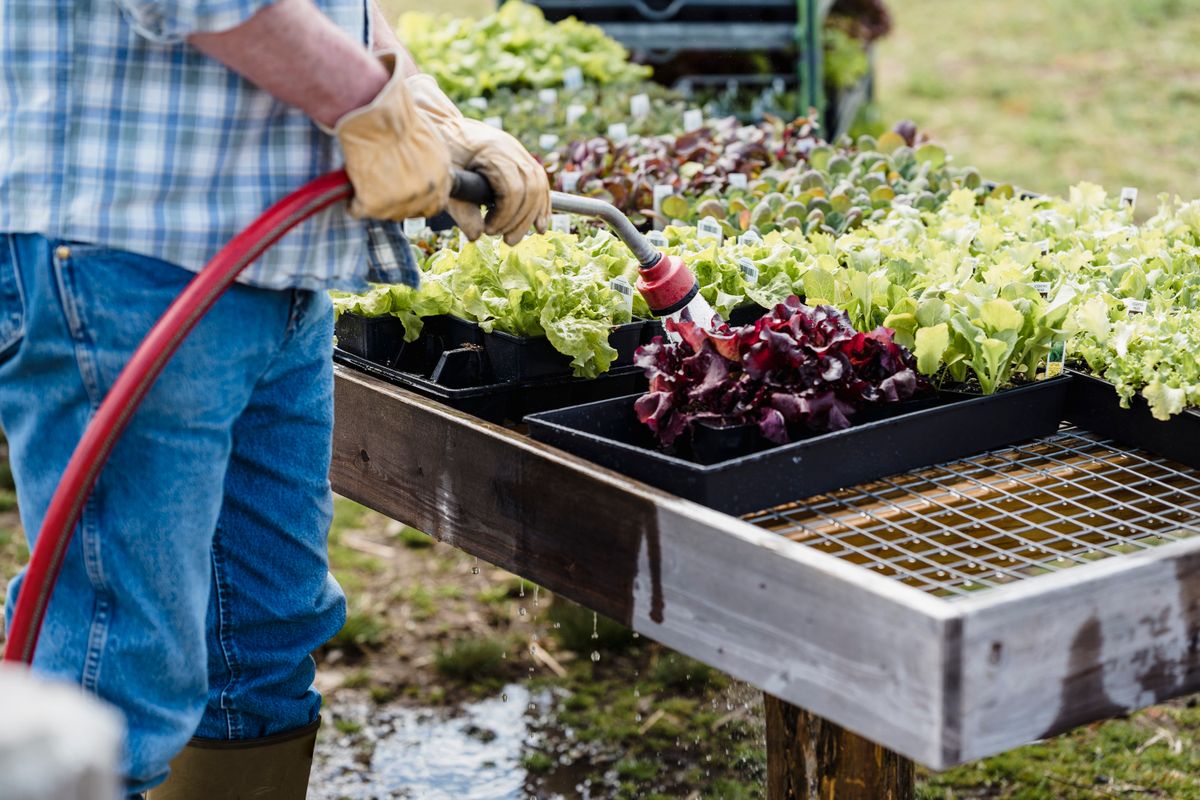
For members with a slightly larger plot, we teach a simple gravity-fed drip system built from a raised jerrycan, basic tubing, and small holes punched at intervals along the line. Water drips slowly and directly to the base of each plant rather than being sprayed across the whole bed, which cuts total water use significantly compared with hand watering with a can, while also reducing the fungal disease pressure that comes with wetting leaves.
Timing matters as much as method
Watering early in the morning or after sunset, rather than in the heat of the day, reduces the amount lost to evaporation before it ever reaches the root zone. This is a free change that costs members nothing but a small shift in routine, and it is often the first thing our trainers ask about when a member reports poor results despite watering regularly.
Combined, these three habits — mulching, drip delivery, and better timing — routinely let members stretch the same amount of water noticeably further through Nairobi's dry months.
Measuring whether conservation efforts are actually working
Members sometimes adopt mulching or drip irrigation and are unsure afterward whether it is actually making a measurable difference or simply feels like it should be helping. We encourage a simple before-and-after comparison: note roughly how much water a bed or sack needed per week before adopting a technique, then track the same figure for several weeks afterward under similar weather conditions. This kind of simple record, similar in spirit to the financial record-keeping covered in a separate article, turns an impression into an actual measured result.
Members who have done this comparison report water savings that are usually noticeable but rarely dramatic from any single technique alone — the real gains tend to come from combining mulching, drip delivery, and better timing together rather than expecting any one change by itself to transform a household's water use.
Adjusting techniques for different bed sizes
The specific water conservation techniques covered here scale somewhat differently depending on whether a member is working with a single sack, a small bed, or a larger open plot. Mulching applies almost identically at any scale, since it is simply a surface treatment. Drip irrigation, by contrast, needs slightly different tubing layouts for a sprawling open bed compared with a cluster of sacks, and we adjust our training demonstrations accordingly depending on what a given group of new members is actually working with.
Members with the smallest sack-only setups sometimes find that consistent, careful hand watering combined with good mulching is simpler to manage well than a full drip system, which is worth building for a larger bed but can be more infrastructure than a single sack strictly requires.
None of these techniques require choosing one over the others — most members who have adopted all three report the biggest gains when mulching, drip delivery, and better timing are used together rather than in isolation. A mulched bed watered by drip line in the early morning uses meaningfully less water than the same bed watered by hand in the middle of the day with no mulch at all, and that combined saving is often the difference between a garden that survives Nairobi's dry months and one that does not. We continue to look for additional low-cost water conservation techniques as members encounter new challenges, and we would rather add a genuinely useful new practice to this training over time than treat the three techniques covered here as a fixed, final list. Members with their own water-saving discoveries are encouraged to share them with a trainer, since several techniques we now teach as standard practice originated exactly this way.
Key takeaways
- Water, not soil or seed, is usually the biggest constraint on a Babadogo plot.
- Mulching with dry grass or cardboard cuts evaporation at almost no cost.
- A simple gravity-fed drip line delivers water directly to roots, reducing waste.
- Watering at dawn or dusk avoids the evaporation losses of midday watering.
Frequently asked questions
What is the cheapest water-saving technique to start with?
Mulching. A layer of dry grass or shredded cardboard over the soil surface costs little to nothing for most members and noticeably slows evaporation.
Is a drip line difficult to build?
No — our basic version uses a raised jerrycan, simple tubing, and holes punched at intervals, and most members can build one in an afternoon.
Does mulch attract pests?
Properly managed dry mulch rarely does; problems usually come from mulching with fresh, wet material instead of fully dried material.