Why bees matter beyond honey
Members considering beekeeping usually think first of honey as the main product, but for a working kitchen garden, the pollination bees provide can matter just as much, particularly for fruiting crops like tomatoes and any fruit trees a household has planted as part of our agroforestry training. A well-pollinated tomato plant sets noticeably more fruit than one relying only on wind and incidental insect visits.
Choosing a hive type for a small plot
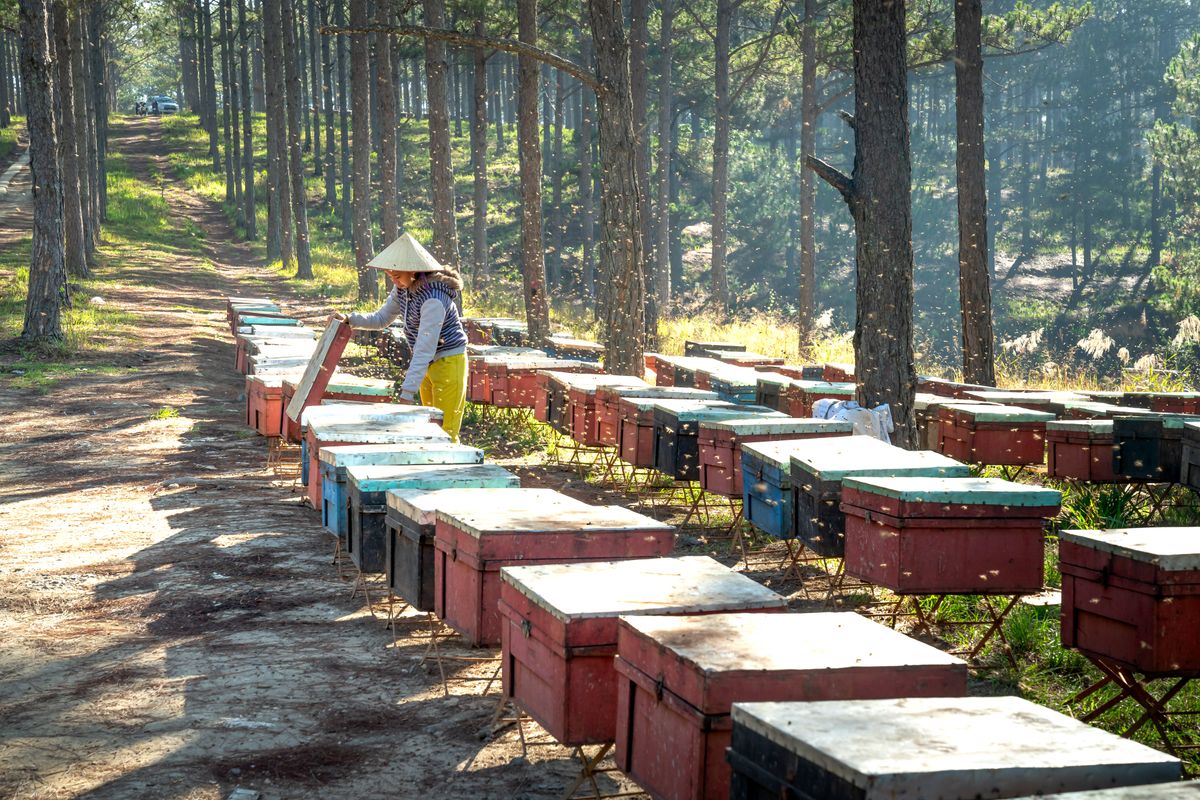
A simple top-bar hive is generally the easiest and least expensive starting point for a first-time beekeeper, requiring less specialized equipment than a full Langstroth hive system and allowing more straightforward, lower-cost inspection and honey harvesting. Positioning matters more than hive type for a small urban plot — a hive should be placed away from frequent foot traffic, ideally with a clear, unobstructed flight path for bees away from where people and children move through the yard.
Managing a hive safely in a shared, crowded neighbourhood
Babadogo's density means beekeeping requires more care around neighbours than it might on an isolated rural plot. We advise new beekeepers to discuss their plans with immediate neighbours before installing a hive, to position hives well away from shared walkways, and to work with a more experienced beekeeper for at least the first season, both to learn safe handling and to identify early any behavioural issues with a particular colony that might make it unsuitable for a densely populated area.
Basic hive maintenance
A hive needs periodic inspection to check colony health, monitor for pests like wax moths, and manage the size of the colony as it grows, generally on a schedule of every one to two weeks during active seasons and less frequently during cooler, less active periods. New beekeepers should expect to be stung occasionally even with careful handling, and basic protective equipment — a veil and gloves at minimum — is a worthwhile initial expense rather than something to skip to save money.
Harvesting honey and building a second income stream
A well-managed hive can produce a meaningful honey harvest once or twice a year depending on local forage availability, and honey has reliable demand and a good price at Babadogo's market day, making it one of the more straightforward value-added products for members already comfortable with basic hive management. As with rabbit keeping, building buyer awareness for a product not every household already regularly buys takes some initial effort, but honey's long shelf life means it can be sold gradually rather than needing to move quickly like fresh produce.
What to do if a hive shows aggressive behaviour
Occasionally a colony develops noticeably more defensive or aggressive behaviour than is typical, which can happen for various reasons including stress, a queen issue, or simply colony temperament. We advise beekeepers to take this seriously rather than hoping it resolves on its own, particularly in a densely populated area like Babadogo — options generally include requeening the colony with the help of an experienced beekeeper, or in more serious cases, relocating or discontinuing that specific hive.
This is one of the clearest reasons we advise new beekeepers to maintain a relationship with a more experienced beekeeper well beyond just their first season, since recognizing and correctly responding to this kind of problem takes experience a first-year keeper is unlikely to have built up alone yet.
Beekeeping asks more of a new member than most of our other training in terms of upfront care and neighbourly coordination, but for members willing to put in that effort, the combination of improved garden pollination and a long-shelf-life honey product makes it one of the more rewarding additions available. We strongly encourage working alongside an experienced beekeeper for at least a full first season before managing a hive independently. We would add that beekeeping remains one of our newer training areas, and we are still building the kind of deep, accumulated local experience that our longer-running programs like sack gardening already have. Members interested in beekeeping should expect our guidance here to keep developing as more members gain hands-on hive management experience.
Key takeaways
- Bees improve pollination for fruiting crops and fruit trees, not just producing honey.
- A simple top-bar hive is the easiest, lowest-cost starting point for a first-time beekeeper.
- Discuss plans with neighbours and position hives away from shared walkways.
- A well-managed hive can produce a meaningful honey harvest once or twice a year.
Frequently asked questions
Is beekeeping safe in a densely populated area like Babadogo?
It can be, with careful hive placement, neighbour communication, and guidance from an experienced beekeeper, especially in the first season.
What equipment do I need to start?
A top-bar hive and basic protective equipment — a veil and gloves at minimum — are the essential starting costs.
How often does a hive need to be inspected?
Roughly every one to two weeks during active seasons, less frequently during cooler, less active periods.
Do I need any formal certification to keep bees in Nairobi?
Requirements can vary; we advise new beekeepers to check current county and national regulations and to work with an experienced local beekeeper who can advise on compliance.