The problem with buying alone
A single household buying a kilogram of certified seed, a bag of manure, or a watering can at a retail agrovet in Nairobi pays the full retail markup every time. For a smallholder or urban farmer working with a tight margin, that markup can be the difference between a season that pays for itself and one that barely breaks even.
Most of our members were buying this way before joining Green Revolution Farmers — one household, one small purchase, one full retail price at a time.
How group buying works in practice
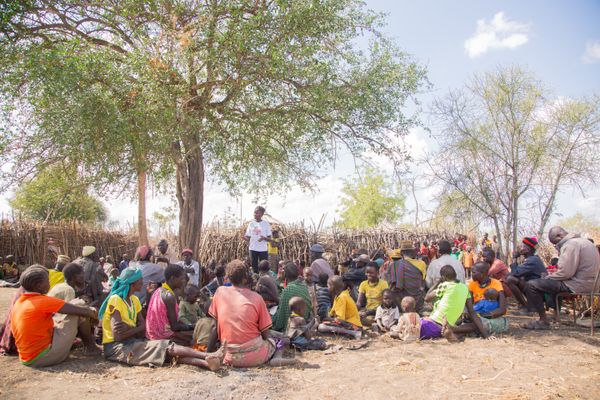
Roughly once a season, ahead of the long and short rains, members submit what inputs they need through their local group leader. Those individual orders are combined into a single bulk order — seed, manure, certified seedlings, or basic tools — and negotiated directly with a supplier or agrovet at wholesale pricing.
The savings are then passed straight back to members rather than retained by the organization, with each household paying only its share of the bulk price plus a small handling contribution that covers transport and coordination.
What this has meant for members
For members who have used the group buying scheme over several seasons, the reported savings on seed and manure alone typically run well above what an individual purchase would have cost, particularly for manure and other bulky inputs where transport is normally the most expensive part of the purchase.
It has also strengthened something less tangible: trust between members who now plan their planting seasons together rather than in isolation, comparing notes on what varieties performed well and what did not.
How we handle disagreements over what to order
Combining dozens of households' input needs into a single bulk order inevitably raises questions about who decides what gets ordered when preferences differ — one household wants a particular tomato variety, another wants to prioritize kale seed instead. We resolve this through local group leaders who collect and consolidate individual requests ahead of a clear seasonal deadline, escalating only genuinely difficult tradeoffs to the wider committee rather than requiring every member to agree on every line item.
In practice, disagreements are rarer than this might suggest, since most members are ordering broadly similar core inputs each season — seed for the crops covered in our five vegetables and sack gardening articles, plus manure — with individual variation showing up mostly in smaller, secondary items that are easy to accommodate without disrupting the main bulk order.
Choosing suppliers members can trust
Group buying only works if the bulk supplier is reliable, which is why our committee vets potential suppliers before committing a season's group order to them, checking on consistency of quality and past pricing behaviour with other buyers rather than choosing purely on the lowest quoted price. A supplier who quotes an attractively low price but delivers poor-quality seed or manure costs members more in the long run than a slightly pricier, reliably good one.
Where possible, we try to maintain relationships with the same trusted suppliers season after season rather than switching purely to chase marginal price differences, since a consistent relationship also tends to mean better service and more flexibility when an order needs to be adjusted at short notice.
Group buying is one of the simplest programs we run, and also one of the easiest for another farming group to copy without needing any outside support. It requires no special legal structure beyond basic trust and a willingness to coordinate timing around planting seasons rather than buying whenever cash happens to be available. If there is one program we would tell an unregistered, informal group of neighbouring farmers to try first, before even considering formal registration, it is this one. We also periodically review whether our group buying arrangement is still delivering genuine savings compared with individual purchases, rather than assuming past performance guarantees continued value. This kind of periodic review, comparing bulk prices against current retail prices at least once a year, keeps the program honest and lets us switch suppliers if a better arrangement becomes available elsewhere.
Key takeaways
- Individual retail purchases of seed and manure carry the full markup every time.
- Members submit orders through a local group leader ahead of each planting season.
- Savings from bulk pricing are passed directly back to member households.
- The scheme has also strengthened planning and trust between member farmers.
Frequently asked questions
How do I join a bulk buying order?
Submit what you need through your local group leader ahead of the long or short rains, when we combine individual orders into a single bulk purchase.
Do I pay anything beyond the wholesale price?
Only a small handling contribution that covers transport and coordination — the wholesale savings themselves are passed straight back to members.
What if I only need a very small quantity?
Small orders are welcome and are simply combined with others heading to the same supplier — there is no minimum quantity required to take part.
Can new members join the group buying scheme immediately?
Yes — there's no waiting period; a new member can submit their first order request through their local group leader as soon as they join.