Why we rely on peer mentorship rather than paid staff
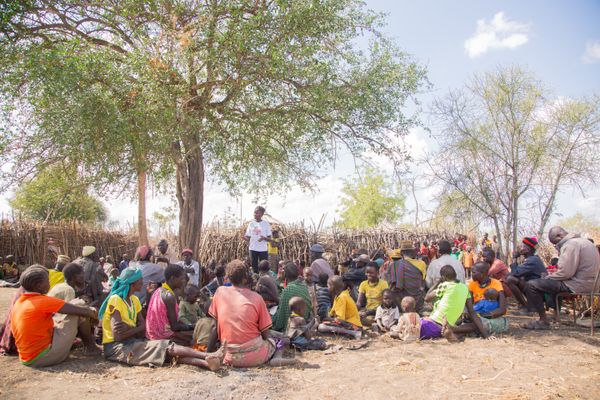
Green Revolution Farmers does not employ a large paid training staff, and it never really has, even as membership has grown. Instead, the organization's actual training capacity comes overwhelmingly from members who started as ordinary training participants and, over a season or two, became confident enough in a particular technique to start teaching it to newer members themselves. This is not a stopgap measure while we wait to afford paid trainers — it is a deliberate structure we believe produces better, more locally relevant training than an outside expert model would.
How a member becomes a mentor
There is no formal application process to become a mentor within the organization. In practice, it happens organically: a member who has had clear success with a particular technique — sack gardening, composting, table banking — starts fielding informal questions from neighbours and newer members, and the committee eventually invites that member to lead a formal training session covering what they have already been teaching informally. Mary Wanjiru, profiled in an earlier post, followed almost exactly this path.
What mentorship actually looks like day to day
Formal training sessions are only part of the mentorship structure. Much of the actual mentorship happens informally — a newer member messaging an established mentor with a photo of a struggling plant, a mentor stopping by a newer member's plot during an unrelated visit to the neighbourhood, or an established table banking group member walking a newer group through their first loan application. This informal layer is, in our experience, where most of the real day-to-day problem-solving happens, well outside any scheduled session.
Why this structure scales well
A model built entirely around a small number of paid experts has a hard ceiling — training capacity is limited to however many sessions those few people can physically run. A peer mentorship model scales differently: as the organization grows, the number of experienced members capable of mentoring newer ones grows roughly alongside it, rather than staying fixed. This is the structural reason Green Revolution Farmers has been able to expand its training reach over the years without a proportional increase in cost.
What mentors get out of it
Mentorship is not a purely one-directional service from experienced members to newer ones. Members who take on a mentoring role consistently report that teaching a technique deepens their own understanding of it, and mentors are the members most likely to eventually join the elected committee, since mentoring naturally builds the kind of visibility and trust within the membership that leadership positions require.
Recognizing mentors within the organization
While mentorship remains informal and unpaid, we have started more deliberately recognizing mentors publicly — through mentions in our annual impact report, and through profile posts like the one covering Mary Wanjiru — partly because public recognition, even without financial compensation, meaningfully reinforces the culture of mentorship we rely on, and partly because it is simply the right thing to do for members contributing significant unpaid time and expertise to the organization.
We are exploring what further, non-financial forms of recognition might be appropriate as the organization continues to grow, while being careful not to formalize mentorship into something that feels transactional or obligatory rather than the genuinely voluntary relationship it currently is.
This peer structure is, in many respects, the real engine behind Green Revolution Farmers' growth — not any single program, but the steady conversion of newer members into confident growers and, eventually, into mentors themselves. If you attend a training session and find yourself understanding a technique well, there is a good chance we will eventually ask if you'd be willing to help teach it to someone newer. We would add that this peer structure took years to develop organically, and we do not think it could have been designed and imposed from the top down in the organization's early days — it emerged because enough members, over enough seasons, found genuine value in helping newer members the way they themselves had once been helped. We would add that this structure depends on a basic culture of patience and generosity among established members, which is not something we can simply mandate, but which we try to model and reinforce through how the organization recognizes and talks about its own volunteers.
Key takeaways
- Our training capacity comes mainly from member mentors, not a large paid staff.
- There's no formal application — mentors emerge organically from demonstrated success.
- Much of the real mentorship happens informally, outside scheduled training sessions.
- This model scales naturally, since mentor capacity grows alongside membership.
Frequently asked questions
How do I become a mentor within the organization?
There's no formal application — it happens organically as members demonstrate consistent success with a technique and start fielding informal questions from others.
Do mentors get paid?
No — mentorship is entirely volunteer-based, consistent with how the whole organization operates.
Can a fairly new member still help mentor someone even newer?
Yes — mentorship doesn't require years of experience, just genuine, demonstrated success with a specific technique worth sharing.
Is there a limit to how many newer members one mentor supports?
No formal limit, though in practice most mentors naturally support a manageable handful of newer members at a time rather than spreading themselves too thin.